 Oseni Solomon Ojochenemi
| 306 Views
Oseni Solomon Ojochenemi
| 306 Views
Discover how birds act as bioindicators of environmental health, signaling pollution, climate change, habitat loss, and agricultural impacts. Learn how African vultures, fish eagles, flamingos, and migratory species reveal ecosystem imbalances and guide conservation efforts.
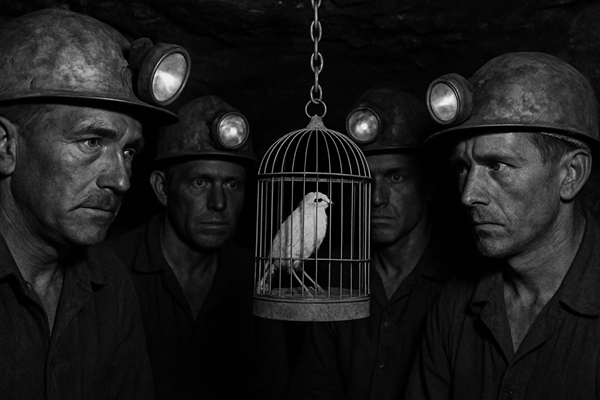
Have you ever heard the phrase “the canary in the coal mine"?
In the past, coal miners carried canaries underground because these birds were far more sensitive to toxic gases like carbon monoxide than humans. If a canary became ill or died, it was an immediate signal that the air was unsafe and miners knew they had to evacuate before it was too late. The bird’s reaction literally saved human lives.
Today, birds are still our canaries, now serving as bioindicators of environmental change on a global scale. They are nature’s bioindicators, acting as early warning systems that reveal pollution, habitat degradation, and climate change impacts long before humans feel the full consequences.
When African vultures decline because of poisoning, or when migratory songbirds shift their routes due to disrupted insect cycles, those changes don’t just affect birdlife, they signal ecosystem imbalances that ultimately threaten biodiversity, ecosystem services, and even human health.
This blog explores those connections: how birds act as bioindicators of ecosystem health, why researchers and conservationists rely on them to track environmental change, and what their declines reveal about the urgent threats facing our planet.
Let’s explore the world through their wings and discover what their stories are telling us.
Why are Birds Excellent Bioindicators?
Birds are some of the most reliable ecological indicators. Unlike hidden organisms, they are visible, easy to identify, and present in almost every habitat (from rainforests to deserts and urban centers). Their presence (or absence) reflects ecosystem balance in real time.
One reason birds are powerful bioindicators is their sensitivity to environmental change. Populations respond quickly to pollution, pesticide use, or habitat loss. Insect-eating birds dropping in numbers often point to pesticide overuse, while declines in wetland birds usually flag water pollution or hydrological change.
These responses appear sooner than in plants or mammals, making birds an early warning system for ecosystems.
Different species reflect different habitat conditions. For example:
- Raptors such as the African Fish Eagle (Haliaeetus vocifer) mirror the health of aquatic ecosystems.
- Seed dispersers like hornbills show forest integrity.
- Vultures, which are now collapsing across Africa, highlight poisoning, land-use change, and food-chain disruption.
Migratory species add another layer of importance. Palaearctic–Afrotropical migrants, like the Eurasian reed warbler, rely on African wetlands during the non-breeding season. Their decline is a red flag not only locally but across entire flyways.
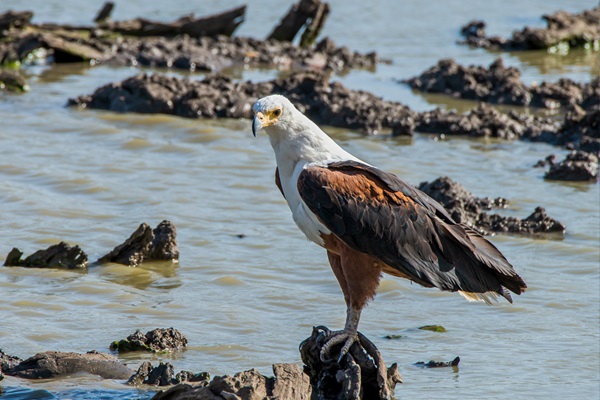
African Fish Eagle perched near river, serving as a bioindicator of aquatic ecosystem health, fish population balance, and wetland biodiversity in Africa. (Image source: Freepik)
Birds as Pollution Indicators
Pollution remains one of the most visible threats to birdlife, and birds act as powerful bioindicators of its presence and severity.
From industrial emissions to pesticide runoff, contaminants in the air, soil, and water often show their impact on bird populations long before other warning systems.
For instance, raptors such as peregrine falcons and ospreys almost disappeared across North America and Europe in the mid-20th century due to the pesticide Dichloro-diphenyl-trichloroethane (DDT).
Their thin-shelled eggs were a direct signal of chemical contamination. Once DDT was banned, these bird populations rebounded, proving that their decline was a bioindicator of a much larger environmental hazard.
In Africa, heavy-metal pollution from mining activities in Zambia’s Copperbelt has led to measurable declines in local bird diversity.
This makes birds as bioindicators of pollution critical for detecting toxic exposure early — whether in industrial zones, farmlands, or wetlands.
Birds as pollution indicators matter because:
- Many species show immediate declines when exposed to toxins.
- Birds interact with air, water, and soil, making them holistic monitors.
- Declines in birds often parallel risks to human health, especially via food chains.
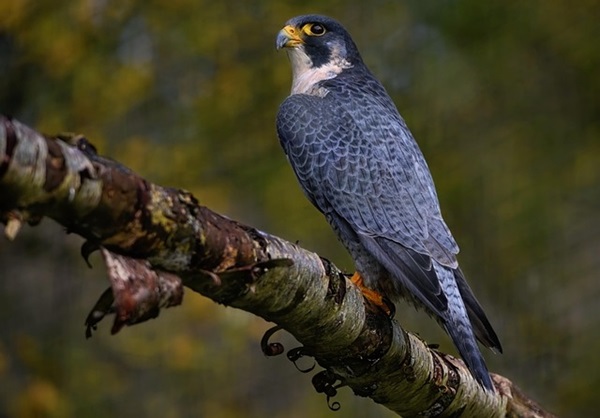
Peregrine Falcon, the fastest animal on Earth, as a pollution bioindicator — its eggshell thinning from DDT pesticides revealed ecosystem contamination before populations recovered after the DDT ban. (Image source: Pixabay)
Birds as Indicators of Habitat Loss and Land-Use Change
Habitat destruction is the leading driver of global bird declines, and it makes birds some of the best bioindicators of land-use change.
When forests are cleared for agriculture, logging, or urban expansion, the first signs of ecological imbalance often appear in the bird community. Forest specialists like hornbills and turacos vanish, while generalists such as doves and crows expand, indicating habitat simplification.
For example, a study in Kenya’s Lake Victoria Basin found that intensive human land use led to significantly lower bird species richness, particularly among specialist species—making them clear indicators of habitat degradation.
In South Africa, grassland birds like the Blue Crane decline where natural fields are converted into cropland, acting as reliable indicators of unsustainable land conversion.
Such trends reinforce why birds are trusted bioindicators of habitat change and land-use transformation.
They respond quickly, visibly, and across multiple habitat types, making them a universal monitoring tool.
Birds often give the earliest warnings of habitat loss and land-use change. This video explains these signals and also highlights how the African Bird Club (ABC) is supporting bird conservation efforts across Africa
Watch how birds reveal habitat loss and how the African Bird Club contributes to protecting threatened ecosystems (Video source: YouTube — Bird Watching Diaries)
When habitats start to degrade, birds often send clear, visible signals:
- Disappearance of specialists: Birds that depend on very specific foods or habitats—like insect-eating warblers or wetland herons—are usually the first to vanish. Their absence signals that something is deeply wrong in that ecosystem.
- Increase in generalists: On the other hand, birds that can live almost anywhere, like pigeons, crows, or starlings, begin to dominate. While these birds are resilient, their rise usually points to an ecosystem under stress.
- Change in balance: Healthy habitats support a wide mix of species. But when only a handful remain while others disappear, it shows a loss of biodiversity and an imbalance in the system.
For conservationists, these patterns act like warning lights on a dashboard, helping them identify which habitats need urgent protection or restoration before the damage becomes irreversible.
Birds as Indicators of Climate Change: Shifts in Ranges and Timing
Climate change is reshaping ecosystems everywhere, and birds give us some of the clearest signs of its impact.
Because they are highly mobile and sensitive to temperature, rainfall, and food cycles, birds act as early warning signals of climate change—often showing stress long before humans notice.
One of the strongest signs is in migration timing. Many migratory birds now arrive earlier or later than they used to, and their schedules no longer match the seasonal peaks of insects or flowers they depend on. This “migration mismatch” means less food for them, fewer chicks surviving, and ripple effects across ecosystems.
Another visible signal comes from range shifts. As temperatures rise, species are moving upslope to cooler mountains or farther north to track suitable climates.
Birds that can’t move fast enough or adapt quickly (especially specialists tied to very specific habitats) face steep population declines.
Watch this video to see real examples of how birds reveal the impacts of climate change on ecosystems and signal shifts in migration, breeding, and population trends.
Migratory birds showing early signs of climate change through altered migration timing and range shifts, illustrating ecosystem impacts and population declines. (Video source: YouTube — Scripps News)
These changes make birds some of the most reliable bioindicators of climate change because:
- They react faster than plants or soil systems.
- Their movements and breeding shifts are easy to track.
- Their declines warn us about wider ecosystem imbalance.
In short, when we see birds changing their migration routes, breeding times, or ranges, they are telling us the story of a warming planet. Watching birds closely helps scientists, policymakers, and communities understand how climate change is affecting biodiversity and why urgent action is needed.
Birds as Bioindicators of Wetland Health and Water Quality
Wetlands are among the richest habitats on Earth, and waterbirds provide an exceptional window into their health.
Declines in wetland species frequently point to changes in water quality, flow, or pollution levels.
In East Africa, the presence of flamingos in lakes like Nakuru and Bogoria is directly tied to algal blooms, which in turn reflect nutrient levels and salinity.
When pollution increases, these iconic species abandon the lakes, serving as unmistakable signals of ecological imbalance.
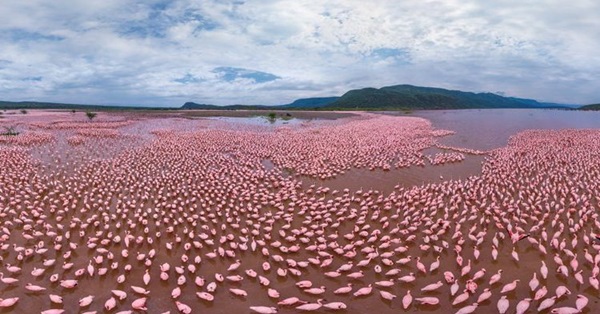
Flamingos at Lake Bogoria in Baringo County, illustrating how waterbird populations serve as bioindicators of wetland health, water quality, nutrient levels, and ecological balance. (Image source: Kenya Wildlife Safari)
The African Waterbird Census, coordinated by Wetlands International, tracks waterbird populations over time to guide wetland management. Wetland birds are not just residents, they serve as strong bioindicators of freshwater ecosystem health.
Waterbirds are strong bioindicators because:
- They feed directly on aquatic organisms.
- They respond quickly to chemical or hydrological changes.
- Their presence (or absence) mirrors both biodiversity and human water security.
Birds as Indicators of Agricultural Practices and Pesticide Use
Farming landscapes host some of the world’s most important bird populations, but also some of the most vulnerable.
Birds in agricultural areas serve as vital bioindicators of sustainable or harmful practices.
Declines in insectivorous birds often signal pesticide overuse, while the loss of seed-eating birds reflects excessive herbicide application.
In Europe, farmland bird indices are a standard metric of agricultural sustainability. In Africa, studies in Nigeria’s farmlands have shown that reduced bird diversity correlates with intensive farming, especially in areas with high pesticide use.
Similarly, vulture declines linked to veterinary drug diclofenac use in livestock highlight how agricultural practices can devastate bird populations.
In farming, declines in insect-eating species serve as bioindicators of unsustainable agricultural practices.
Monitoring these signals allows governments and farmers to adopt better-integrated pest management systems, preserving both biodiversity and food security.
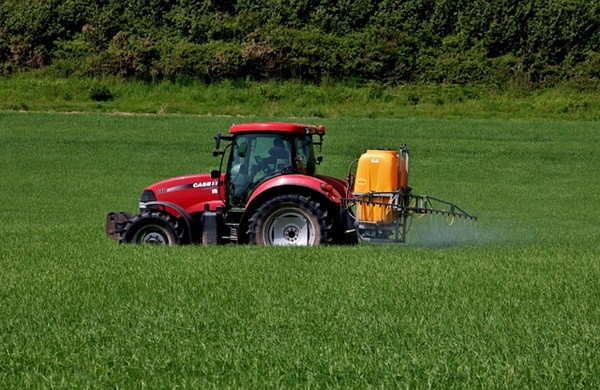
Pesticides have a negative impact on farmland birds, serving as bioindicators of unsustainable agricultural practices, causing declines in insectivorous and seed-eating species, and threatening biodiversity and food security. (Image source: Pixabay)
Birds as Community-Level Bioindicators and Cultural Signals
Beyond science, birds function as indicators at the community and cultural level when their behavior aligns with environmental patterns or local traditions.
In many parts of Eastern and Southern Africa, the southern ground hornbill’s early morning call is linked to upcoming rainfall or drought—an ecological signal that communities use to align farming and pastoral routines.
Citizen-led bird monitoring projects illustrate how local observations contribute to long-term ecological tracking. Residents participating in these efforts effectively use birds as indicators of environmental change, enriching both science and community awareness.
Community-level signals include:
- Cultural warnings: Declines in species with traditional significance.
- Food security links: Birds vanish alongside local crop or fish declines.
- Shared monitoring: Citizen science projects empower people to validate their observations with scientific data.
Projects like the African Bird Atlas Project (ABAP) have empowered communities to record and share bird observations, producing high-quality datasets while reinforcing the role of birds as indicators of environmental change.
Conclusion
Birds are more than just creatures of the sky, they are guardians of the Earth’s balance, whispering truths about the health of our world. From African fish eagles that mirror the purity of our waters, to peregrine falcons whose struggles once revealed the silent dangers of pesticides, birds carry warnings we cannot afford to ignore. Each wingbeat, each song, is a signal telling us whether our ecosystems are thriving or collapsing. To lose their voices is to lose our early warning system, and with it, our chance to act in time. By listening to these feathered sentinels, we safeguard not only biodiversity but also our own survival. The fate of birds is tied to the fate of humanity—and their future rests in our hands.
Call to Action
Have you noticed changes in local bird populations in your area? Share your observations in the comments below! Your stories can help scientists and fellow readers understand how birds are signaling the health of our environment and inspire collective action for conservation.
Related Blog Posts
- Why Birds Matter – 7 Crucial Ecosystem Services They Provide: Discover ecosystem services of birds—from pest control and seed dispersal to pollination and bioindication—and why bird conservation matters for people and planet.
- 10 Simple but Powerful Ways You Can Help Bird Conservation (Even from Your Backyard): Practical steps anyone can take to support the very ecosystem services birds provide.
- 10 Iconic Bird Habitats in Africa (and the Birds That Live There): Discover Africa’s top 10 bird habitats, from forests to wetlands, savannas, and coastlines. Learn what birds live there, where to find them, and why protecting their homes matters.