 Oseni Solomon Ojochenemi
| 450 Views
Oseni Solomon Ojochenemi
| 450 Views
Discover Africa’s top 10 bird habitats, from forests to wetlands, savannas, and coastlines. Learn what birds live there, where to find them, and why protecting their homes matters.
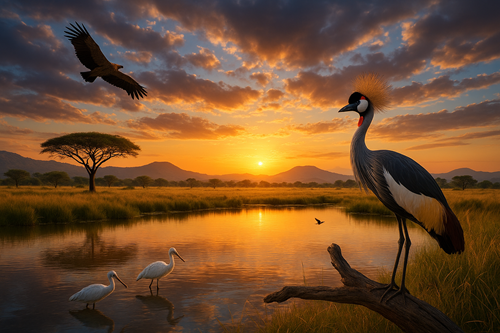
Africa is a birder’s dream. Did you know the continent is home to more than 2,477 bird species—with around 1,400 found nowhere else on Earth? From the flamingos that paint Rift Valley lakes pink to African grey parrots chattering in West and Central African forests, this is a continent where every habitat tells a story.
But there’s more to this than just beauty. Birds thrive in very specific habitats—forests, grasslands, wetlands, deserts, mountains, and even our cities. If we lose these habitats, we risk losing the birds and the ecosystem services they provide, from pollination and seed dispersal to natural pest control.
In this guide, we’ll explore the 10 most important bird habitats in Africa, highlight the species that live there, and give you a glimpse into where you can see them. Along the way, you’ll also discover why protecting these habitats matters—not just for birds, but for people too.
If by the end you’re inspired to take action, don’t miss our related post: 10 Simple but Powerful Ways You Can Help Bird Conservation (Even from Your Backyard) — because every small effort helps protect these habitats for generations to come.
Why Habitats Matter for Birds
Every bird species depends on a certain combination of food, shelter, and nesting conditions. Remove or damage the habitat, and the bird population quickly declines. Wetlands, for example, are home to African jacanas that seem to “walk on water” thanks to their long toes, while grasslands give raptors like Bateleurs Eagle and Secretarybirds the open space they need to hunt.
Bird habitats are not only important for the birds themselves. They provide ecosystem services that keep human life running smoothly—fertile soils, clean water, and even pest control (think of swallows catching insects by the thousands).
Africa is home to an extraordinary variety of habitats, each supporting its own community of unique and fascinating bird species.
Let’s dive into these habitats one by one and explore the birds that call them home.
1. Forests
Description:
- Africa’s forests, from the Congo Basin to West Africa’s Upper Guinea rainforests, are lush ecosystems with dense tree cover, rich soils, and abundant rainfall. They harbor some of the greatest biodiversity on Earth.
Birds you might see:
- African grey parrots (famous for their intelligence)
- Hornbills with their loud calls
- and the vibrant great blue turaco gliding between canopy gaps.
Where to find them:
- The Congo Basin is the world’s second-largest rainforest, spanning six countries. It’s estimated to host over 1,000 bird species, including rare endemics like the Congo peafowl.
- In Ghana’s Kakum National Park, travelers can walk a 350-meter canopy walkway where turacos and hornbills are often spotted at eye level.

Canopy walkway at Kakum National Park in Ghana’s rainforest — a breathtaking birdwatching spot where turacos, hornbills, and even African grey parrots thrive.
Image source: Monocletophat123 / CC BY-SA 3.0 via Wikimedia Commons
Case study:
- Research shows that populations of African grey parrots in Cameroon’s forests have declined by over 50% in just three decades due to deforestation and wildlife trade. This is a clear warning sign: when forests disappear, so do the birds that depend on them.
2. Grasslands and Savannas
Description:
Open landscapes with grasses and scattered trees, these habitats cover large parts of East and Southern Africa. They support vast herds of grazing mammals and the birds that live alongside them.
Birds you might see:
- Ostriches striding across plains
- Lilac-breasted Rollers perched on Acacia branches,
- and Secretarybirds stalking snakes on foot.
Where to find them:
- The Serengeti-Mara ecosystem (Tanzania and Kenya) is world-famous not only for the wildebeest migration but also for its birdlife. More than 500 bird species occur here, including the Kori Bustard (the world's heaviest flying bird).
- Another key site is Kruger National Park in South Africa, where tourists frequently spot ground hornbills and martial eagles.
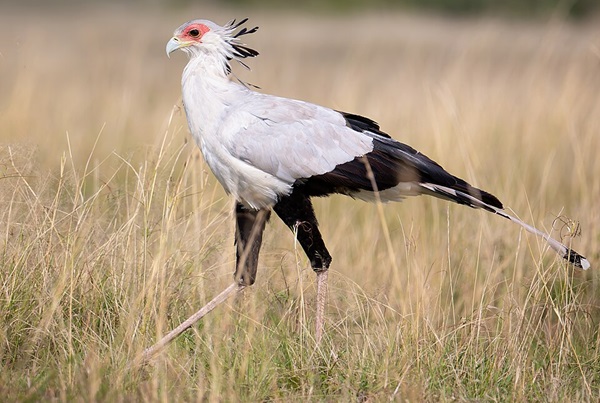
Secretarybird striding through the Serengeti-Mara grasslands in East Africa, famous for stalking snakes in the open plains
Image source: Sumeet Moghe / CC BY-SA 4.0 via Wikimedia Commons
Case study:
- The Serengeti hosts one of the healthiest populations of Secretarybirds, a species declining elsewhere in Africa due to habitat loss. Conservationists are using the Serengeti as a model for managing grasslands to protect this species.
3. Wetlands
Description:
- Wetlands include swamps, marshes, and floodplains, where water levels fluctuate seasonally. These are critical feeding and breeding grounds for birds.
Birds you might see:
- African jacanas balancing delicately on lily pads,
- Shoebills lurking in papyrus swamps,
- and Herons wading in shallow waters.
Where to find them:
- The Niger Delta is a vast, biodiverse, and economically significant wetland in Nigeria, forming the largest delta in Africa and the third largest in the world. It supports pelicans, kingfishers, and countless migratory species.
- Head to Botswana’s Okavango Delta, a United Nations Educational, Scientific and Cultural Organization (UNESCO) World Heritage Site, and you’ll quickly see why birders call it paradise. With more than 450 species, from wattled cranes to saddle-billed storks, it’s a place where every turn of the canoe brings a new surprise
Case study:
- The shoebill, one of Africa’s most iconic birds, depends almost entirely on papyrus wetlands in countries like Uganda and Zambia. Local ecotourism projects now generate income for communities, giving them incentives to protect shoebill habitats.
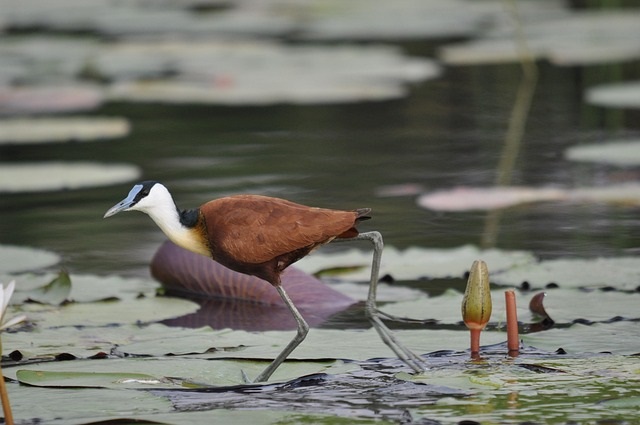
Nicknamed the ‘Jesus bird,’ the African Jacana effortlessly walks across lily pads as if walking on water. Wetlands like the Niger Delta and Okavango Delta are home to this incredible species.
Image source: Pixabay
4. Rivers
Description:
- Rivers cut across Africa’s landscapes, providing year-round water sources and supporting gallery forests and floodplains.
Birds you might see:
- African fish eagles soaring above waterways,
- Pied Kingfishers hovering before diving,
- Bee-eaters nesting in sandy riverbanks.
Where to find them:
- The Zambezi River, flowing through six countries, is home to spectacular birdlife.
- Victoria Falls National Park hosts species like trumpeter hornbills and rock pratincoles nesting on exposed river rocks.
- In Uganda’s Nile River (the longest river in Africa), birders often see giant kingfishers and white-throated bee-eaters.
Case study:
- A study on the Chobe River in Botswana found that the nesting success of waterbirds closely reflects fish populations, making them excellent and reliable bioindicator of river health.
Discover 30 unique and incredible birds of the Chobe River in Botswana — stunning birdwatching safari footage of iconic species in Africa
Video source: YouTube — Pangolin Wildlife Photography
5. Lakes
Description:
- Africa’s lakes range from freshwater giants like Lake Victoria to alkaline soda lakes of the Rift Valley. Each attracts its own bird communities.
Birds you might see:
- Flocks of flamingos feeding on algae,
- Cormorants diving underwater,
- and African Darters spreading their wings to dry.
Where to find them:
- Lake Nakuru in Kenya is famous for its flamingo gatherings, sometimes numbering over a million.
- The Rift Valley lakes—including Naivasha, Manyara, and Bogoria also host pelicans, grebes, and African fish eagles.
- Lake Malawi, one of the deepest lakes in the world, shelters both fish eagles and rare kingfishers along its shores.
Case study:
- In Lake Bogoria, conservationists monitor flamingo numbers to track algae blooms caused by climate change, demonstrating how bird populations reveal environmental changes.
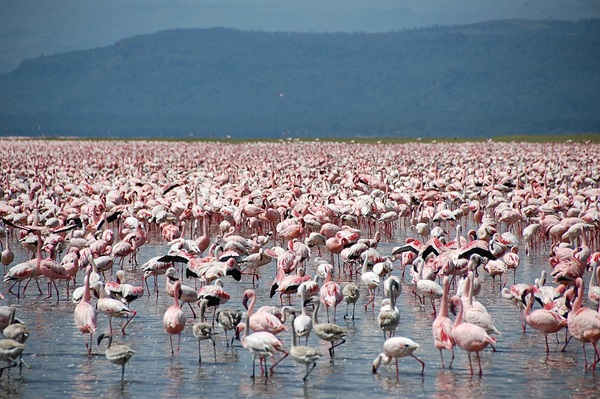
Thousands of Lesser Flamingos turning Lake Nakuru pink — one of Africa’s most breathtaking bird spectacles
Image source: Syllabub / CC BY-SA 3.0, via Wikimedia Commons
6. Mountains and Highlands
Description:
- These habitats include Africa’s high-altitude ecosystems, where cooler climates and unique vegetation support endemic bird species.
Birds you might see:
- Rwenzori Turacos with their brilliant green plumage,
- Lammergeiers gliding across cliffs,
- and Sunbirds feeding on alpine flowers.
Where to find them:
- The Ethiopian Highlands are known as “the Roof of Africa” and host over 20 endemic bird species, including the Blue-winged Goose and Ethiopian Siskin.
- The Rwenzori Mountains on the Uganda–DRC border are another hotspot, where turacos, robins, and longclaws thrive in misty montane forests.
Case study:
- The critically endangered white-winged flufftail, with fewer than 1,000 individuals left, depends on high-altitude wetlands in Ethiopia and South Africa. Conservation programs now work with farmers to protect these fragile marshes. Organizations like BirdLife South Africa are working to safeguard this species by promoting sustainable wetland management.
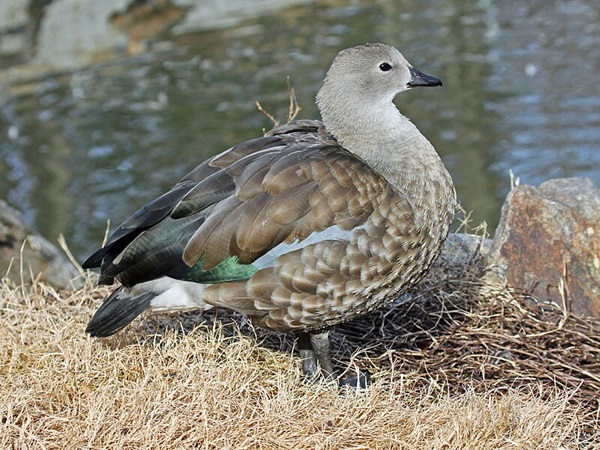
The Blue-winged Goose — found only in Ethiopia’s highlands. With its subtle blue wing patches, this goose is Africa’s only true highland waterfowl.
Image source: DickDaniels (theworldbirds.org) / CC BY-SA 3.0, via Wikimedia Commons
7. Coastal and Marine Habitats
Description:
Africa’s 30,000 km coastline includes sandy beaches, rocky cliffs, and offshore islands that support seabirds and shorebirds.
Birds you might see:
- African penguins waddling on beaches,
- Cape Gannets diving for fish,
- Flamingos feeding in coastal lagoons.
Where to find them:
- Boulders Beach near Cape Town is one of the few places where tourists can see African penguins up close.
- In Namibia’s Walvis Bay, huge numbers of migratory waders gather each year.
- Offshore islands like Mauritius and Seychelles shelter rare seabirds, including tropicbirds and noddies.
Case study:
- African Penguin numbers have dropped by more than 60% since the 1980s due to overfishing of sardines and anchovies, their main food source. As of 2024, the African penguin is listed as critically endangered on the IUCN Red List, with the remaining mature individuals around 19,800 birds in a declining population.
Watch African penguins at Boulders Beach near Cape Town — one of the best places in the world to see penguins in their natural habitat
Video source: YouTube — Paul Brown
8. Urban Areas
Description:
- Cities may not seem like bird habitats, but they provide food and nesting spaces for adaptable species.
Birds you might see:
- Pied Crows scavenging in markets,
- Barn Swallows roosting under bridges, and
- Rock Doves perched on rooftops.
Where to find them:
- In Lagos, Nigeria, Pied Crows often forage in traffic roundabouts.
- Nairobi, uniquely bordered by a national park, records over 600 bird species within city limits—including both urban-adapted birds and migratory visitors.
Case study:
- Studies in Cape Town found that green urban parks significantly increase bird diversity compared to heavily built-up areas—showing that city planning can support birdlife.
9. Agricultural Lands
Description:
- Farms and fields across Africa provide modified habitats where certain bird species thrive, though often with conservation challenges.
Birds you might see:
- Cattle egrets following plows,
- Weavers nesting in crop fields, and
- Kestrels hunting rodents.
Where to find them:
- In Nigeria’s rice-growing regions, flocks of Queleas (a species of weaver birds) gather in the millions, often terrorizing rice farmers. Many other rice-growing regions in Sub-Saharan Africa face similar challenge.
- In East Africa’s coffee and tea plantations, sunbirds and bee-eaters find nectar and insects among shade trees.
Case study:
- In Kisumu County, Kenya, huge flocks of Red-billed Queleas attack rice farms, causing losses. Experts recommend non-harmful methods like timely monitoring, fine-mesh crop netting, reducing nearby roost vegetation, coordinated community scaring, and other practices that safeguard harvests while minimizing bird deaths and preserving ecological balance.
Watch how Red-billed Quelea strip rice farms in Kisumu County, Kenya, driving farmers to chemical use that endangers both birds and ecosystems
Video source: YouTube — Capital FM News
Why This Matters for Conservation
Imagine standing at the edge of the Congo Basin, hearing the distant call of a grey parrot echoing through trees that have stood for centuries. Now imagine that same forest cleared for timber within a single season—its silence replacing the chorus of birds.
This is the reality facing Africa’s habitats today. Logging, agriculture, climate change, and rapid urbanization are shrinking forests, draining wetlands, and fragmenting savannas at an alarming rate. Each lost habitat doesn’t just mean fewer birds—it means fewer pollinators, less clean water, diminished fertile soils, and weakened natural pest control.
Every time we protect a wetland, a stretch of savanna, or a coastal bay, we are safeguarding more than wildlife. We are preserving life-support systems that sustain both birds and people. Protecting bird habitats is not just an act of conservation, it’s an act of survival for future generations.
Conclusion
Africa’s forests, grasslands, wetlands, rivers, lakes, mountains, coasts, cities, and farmlands are more than places on a map. They are living systems that sustain some of the most spectacular birdlife on the planet.
Whether you dream of seeing flamingos gathered along a Rift Valley lake or simply want to welcome weavers into your backyard, every birding experience begins with appreciating habitats. By protecting them, we preserve beauty, balance, and life itself—for birds and for us.
Now it’s your turn!
Which of Africa's habitats or bird sighting amazed you most? Share your story in the comments below; your story might just inspire someone else to care, too.
Related Blog Posts
- 10 Simple but Powerful Ways You Can Help Bird Conservation (Even from Your Backyard) — Practical steps anyone can take to support the very ecosystem services birds provide.
- Birds as Bioindicators: What Their Decline Tells Us — How changes in bird populations warn us about ecosystem health.
- Why Birds Matter – 7 Crucial Ecosystem Services They Provide: Discover ecosystem services of birds—from pest control and seed dispersal to pollination and bioindication—and why bird conservation matters for people and planet.